
The Ultimate German Shepherd Feeding Guide: Safe Foods and What to Avoid
- May 16
- 10 min read
Updated: May 18

When people ask me for a German Shepherd feeding guide, I always tell them that food is one of the most important parts of raising a healthy German Shepherd.
A German Shepherd puppy grows fast. The food you give that puppy affects growth, coat, energy, digestion, stool, joints, and overall condition. If you feed cheap food, switch food too fast, overfeed, or give the wrong foods, you can create problems very quickly.
At Royal Tribes K9, I care a lot about nutrition because I see the difference in the dogs. A dog that eats high quality food looks better, feels better, has better coat condition, and usually grows in a healthier way.
This guide will explain what I recommend from my experience, what foods German Shepherds can eat, what foods to avoid, how to transition food, and how to support a puppy’s coat, growth, and digestion.
What Is the Best Food for a German Shepherd Puppy?
When buyers ask me about the best food for GSD puppy growth, I always explain that the food should be high quality, balanced, and right for a large breed puppy.
From my experience, raw food can be one of the best options for German Shepherds when it is done correctly. Raw chicken, raw meat, raw liver, and other raw ingredients can be amazing for the breed because German Shepherds usually do very well on high quality protein.
But I also want buyers to understand something important: raw feeding must be done correctly. It is not just throwing raw meat in a bowl. Puppies need balanced nutrition, safe handling, the right calcium and phosphorus balance, and the right amount of organ meat, muscle meat, and other nutrients.
Some veterinary organizations warn about raw or undercooked animal protein because of bacteria and pathogen risks. The AVMA discourages feeding raw or undercooked animal source protein that has not been treated to eliminate pathogens, and the FDA says raw pet food was more likely than other tested pet foods to contain disease causing bacteria such as Salmonella or Listeria.
So for families who want to feed raw, I always recommend doing it safely, keeping everything clean, storing food correctly, and getting guidance if they are not sure.
For buyers who do not want to feed raw, I usually recommend high quality dry food. The two dry food brands I personally like and use are Royal Canin and Orijen. For German Shepherd puppies, especially large breed puppies, the goal is steady healthy growth, not overly fast growth.

My Professional Feeding Style for RTK9 Puppies
At Royal Tribes K9, I personally like using high quality dry food with raw food when it is done correctly.
But every puppy and every family is different. That is why I do not want people to take feeding advice and apply it blindly without understanding their own puppy. The right diet should be balanced, consistent, and safe.
For a new RTK9 puppy owner, I usually recommend:
Two meals a day High quality dry food Raw food only when done correctly Plenty of clean water all the time Enough space to run and move Simple supplements when needed Slow food transitions
At the age most puppies go home, two meals a day is usually good. I do not like making feeding too complicated for new owners. A simple, consistent routine usually works better than changing too many things at once.
Should You Mix Dry Food With Raw Food?
I personally like mixing high quality dry food with raw food when it is done correctly.
The dry food gives a strong foundation, especially when it is a quality brand like Royal Canin or Orijen. Raw food can add natural protein and variety when the owner understands how to feed it safely.
But again, raw feeding must be balanced and handled carefully. Raw meat can carry bacteria, and AKC nutrition content also warns that raw diets may carry antibiotic resistant bacteria that can be shed into the home environment even if the dog does not look sick.
So my advice is simple: if you want to feed raw, do not guess. Learn the right way, keep it clean, and ask for guidance.
If you do not want to feed raw, that is okay too. A high quality dry food can still work very well.
Do German Shepherd Puppies Need Goat Milk?
Goat milk is not really required for every German Shepherd puppy.
If the owner wants to use it, they can add a small amount on top of the dry food. But I do not see goat milk as something every puppy must have.
Some people add too many things too quickly when the puppy first comes home. That can upset the stomach. I prefer keeping the routine simple first, then adding things carefully if needed.
The main focus should be high quality food, clean water, steady feeding, and good digestion.
Supplements I Like for German Shepherd Puppies
For supplements, I like NuVet. That is one of the best supplements I use.
I also like fish oil. I usually get fish oil jugs from Amazon, and I think they are amazing for supporting coat quality and overall condition.
For a German Shepherd, especially a long coat German Shepherd, the coat needs support from the inside. Good food and good fats can make a big difference in how the dog looks.
Supplements I personally like include:
NuVet Fish oil
I do not usually recommend adding too many supplements at once. More is not always better. A puppy needs consistency, not a confusing routine with too many products.

Are Probiotics Necessary?
Probiotics are not really needed unless the puppy has a digestive issue.
If the puppy has normal stool, good energy, and no stomach problem, I do not usually push probiotics. But if the puppy has loose stool, digestion issues, or is going through a stressful transition, probiotics may help.
The most important thing is to watch the puppy. If the puppy is eating well, drinking water, playing, and having good stool, that is a good sign.
If the puppy has ongoing diarrhea, vomiting, low energy, or does not want to eat, that is when the owner should contact the breeder and also speak with a vet.
What Can German Shepherds Eat?
A lot of owners ask, what can German Shepherds eat besides regular dog food?
German Shepherds can eat many healthy foods when they are given the right way and in the right amount.
Some foods I like include:
Raw chicken when done safely Raw meat when done safely Raw liver in proper amounts Eggs Rice Carrots Pumpkin Blueberries Cooked chicken
These foods can be good as part of a balanced routine or as simple treats. I like foods that give the dog real nutrition, especially good protein and clean natural ingredients.
But owners should still be careful. Safe foods should not be overused, and the main diet should stay balanced.
For example, liver can be very nutritious, but too much liver is not good. Rice can be useful, especially when the stomach needs something simple, but rice should not replace a full balanced diet. Blueberries and carrots can be good treats, but they should not become the main meal.
Balance matters.

Foods German Shepherds Should Avoid
Some foods should never be given to German Shepherds because they can be dangerous.
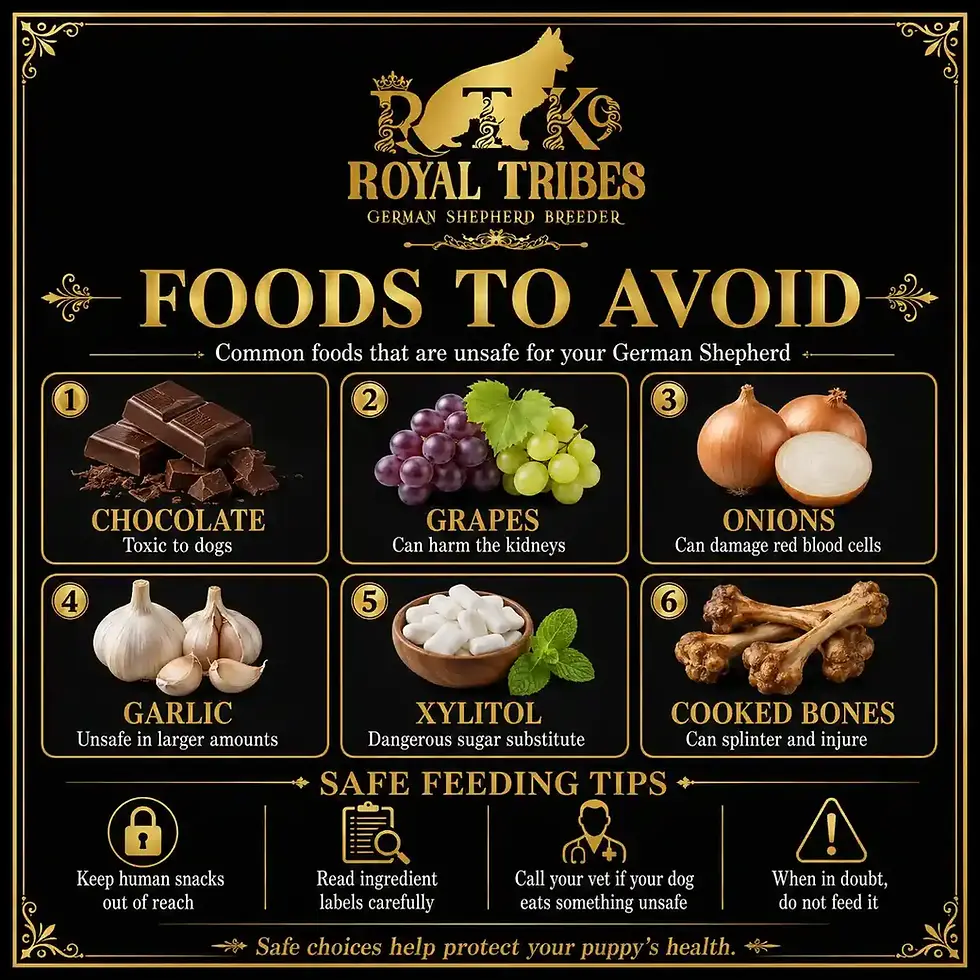
Foods to avoid include:
Chocolate Grapes Raisins Onions Garlic Cooked bones Too much fat Junk food Spicy food Alcohol Xylitol
The AKC explains that chocolate contains toxic methylxanthines, and the ASPCA lists common people foods to avoid, including chocolate, xylitol, alcohol, grapes, raisins, onions, and garlic.
Cooked bones are also very dangerous because they can splinter. AKC’s Chief Veterinarian warns that cooked bones can break into shards and cause choking or serious damage to the mouth, throat, or intestines.
Even if your dog wants the food, that does not mean it is safe.
Keep the diet clean, simple, and healthy.
How to Switch Your German Shepherd Puppy’s Food
When a puppy first goes home, I recommend changing food slowly.
Do not switch the food suddenly unless there is a serious reason. A sudden food change can upset the puppy’s stomach and cause loose stool, vomiting, or stress during the adjustment period.
The best way is to keep the puppy on the same food at first, then slowly mix the new food in over 7 to 10 days.
A simple food transition can look like this:

Days | Feeding Mix |
Days 1 to 2 | 75% old food, 25% new food |
Days 3 to 5 | 50% old food, 50% new food |
Days 6 to 8 | 25% old food, 75% new food |
Days 9 to 10 | 100% new food |
This gives the puppy’s stomach time to adjust and makes the transition easier.
When a puppy goes to a new home, everything is already changing. New house, new people, new smells, new schedule. The food should not change too fast on top of all that.
Common Feeding Mistakes New German Shepherd Owners Make
Some of the most common feeding mistakes I see are:
Overfeeding Switching food too fast Giving too many treats Feeding cheap food Not providing enough clean water Using too many supplements Not giving enough exercise Feeding too many table scraps Giving unsafe human foods Changing the routine too much
German Shepherd puppies grow fast, but that does not mean they should be overfed. Too much food, too many treats, or poor quality food can affect growth, digestion, weight, energy, and overall health.
I always tell buyers to keep the feeding routine simple, clean, and consistent.
Good food, clean water, proper portions, enough activity, and a slow transition are usually better than changing too many things at once.
How to Know If Your German Shepherd Puppy Is Eating Well
A German Shepherd puppy that is eating well and growing properly should show it in the body and behavior.
Good signs include:
Good energy Good stool Shiny coat Steady growth Clear eyes Playful attitude Healthy appetite Comfortable body condition
The puppy should not look too skinny, but it should also not be overweight.
For German Shepherd puppies, I do not like them too heavy too fast because that can put extra pressure on their joints while they are growing.
Good food should support steady growth, not rushed growth. A healthy puppy should look active, alert, clean, and comfortable.
If the puppy is eating but has constant loose stool, low energy, vomiting, or poor coat condition, something may need to be adjusted.
German Shepherd Nutrition for Coat Health
German Shepherd nutrition affects the coat a lot.
A German Shepherd’s coat usually looks better when the dog is eating high quality food with good protein, healthy fats, and the right supplements.
For long coat German Shepherds, I like fish oil because it can help support a healthier, shinier coat and better overall condition. Good hydration also matters. The dog should always have plenty of clean water.
For better coat health, I recommend focusing on:
High quality protein Healthy fats Fish oil Clean water Good supplements Avoiding cheap food Weekly brushing Keeping the dog clean
Cheap food can affect the coat, skin, stool, energy, and overall look of the dog.
If you want a German Shepherd to look healthy on the outside, you need to feed the dog correctly on the inside.
Feeding and Exercise Work Together
Food is important, but exercise matters too.
I always tell buyers to make sure the puppy has plenty of water and enough space to run around. German Shepherds need movement. They are active, smart dogs, and they should not just eat and sit all day.
Good nutrition supports the body. Exercise helps use that nutrition the right way.
A puppy that eats well and moves well usually develops better energy, better muscle, and better overall condition.
But exercise should still be age appropriate. Young puppies should not be pushed too hard, especially while they are growing. Let them play, move, explore, and build strength naturally.
Why Cheap Food Can Cost More Later
Some people try to save money by feeding cheap food, but that can create problems later.
Cheap food may lead to:
Poor coat Dry skin Bad stool Low energy Digestive issues Weight problems Poor growth More vet visits
A German Shepherd is a high quality dog, and it needs high quality nutrition.
If you invest in a good puppy, you should also invest in good food. The food is what helps support the dog’s body every single day.
That does not mean you need to make feeding complicated. It just means you should choose quality.
My Final Advice on German Shepherd Nutrition
The best advice I can give buyers about German Shepherd nutrition is to follow the feeding instructions your breeder gives you, especially when the puppy first goes home.
Do not change too many things at once. Keep the routine clean, simple, and consistent.
If you have questions, you can always reach out to me or speak with a health professional. A vet is important, especially for medical concerns. But the breeder also has valuable experience because they know the breed, the bloodline, the puppies, and what has worked best for that specific type of German Shepherd.
A breeder who has raised many German Shepherds can help guide you toward the best nutrition routine for your dog’s growth, coat, digestion, and overall condition.
At Royal Tribes K9, we want our puppies to grow strong, healthy, beautiful, and happy. Good food is one of the biggest parts of that.
Need Help Feeding Your German Shepherd Puppy?
If you are bringing home a Royal Tribes K9 puppy or you have questions about German Shepherd feeding, nutrition, coat support, or puppy growth, contact Royal Tribes K9. We can help guide you based on the puppy, bloodline, age, and your family’s routine.
FAQ: German Shepherd Feeding Guide
What is the best food for a German Shepherd puppy?
The best food for a German Shepherd puppy is a high quality, balanced diet that supports steady large breed growth. From my experience, Royal Canin and Orijen are two dry food brands I like, and raw food can also be beneficial when done correctly and safely.
Is raw food good for German Shepherds?
Raw food can be good for German Shepherds when it is done correctly, balanced properly, and handled safely. However, raw food can carry bacteria risks, so owners should be careful and get guidance before feeding raw.
How many times a day should I feed my German Shepherd puppy?
At the age most RTK9 puppies go home, I usually recommend two meals a day. The exact amount depends on the puppy’s age, size, food type, and body condition.
Can German Shepherds eat eggs?
Yes, German Shepherds can eat eggs when given properly. Eggs can be a good source of nutrition, but they should be used as part of a balanced diet.
Can German Shepherds eat rice?
Yes, rice can be safe for German Shepherds and is sometimes useful when the stomach needs something simple. But rice should not replace a complete balanced diet.
Can German Shepherds eat pumpkin?
Yes, pumpkin can be useful for digestion when given in the right amount. It should be plain pumpkin, not pumpkin pie filling.
What foods should German Shepherds avoid?
German Shepherds should avoid chocolate, grapes, raisins, onions, garlic, cooked bones, too much fat, junk food, spicy food, alcohol, and xylitol.
Should I give my German Shepherd puppy goat milk?
Goat milk is not required for every puppy. If you want to use it, you can add a small amount on top of dry food, but it should not replace a balanced diet.
Are probiotics necessary for German Shepherd puppies?
Probiotics are not usually needed unless the puppy has a digestive issue. If the puppy has normal stool, good energy, and no stomach problem, probiotics may not be necessary.
What supplements do you recommend for coat health?
For coat health, I like high quality food, fish oil, clean water, and simple supplements like NuVet. Good nutrition helps support a healthier, shinier coat.


Comments